
I built my first AI platform in 15 minutes with Lovable
Here’s what I learned

Last week, I went from idea to working platform in the time it takes to watch a sitcom episode. No coding bootcamp. No Stack Overflow tabs. Just me, Lovable, and a clear vision of what I wanted to build.
If you’d told me two years ago this was possible, I would’ve looked at the development team around me and laughed. But here we are, living in a world where the barrier between “I wish this existed” and “I already built it” has collapsed entirely.
Here’s what I learned building my first AI-powered platform, and what it revealed about the future of software development.
It’s remarkably straightforward (if you can write clearly)
You don’t need to code. You need three things: a somewhat clear idea, the ability to describe what you want, and 10–15 minutes of focused time.
That’s it.
The skill that matters now isn’t memorizing syntax or debugging obscure errors. It’s clarity of thought. Can you articulate your vision the way you’d explain it to a colleague? Can you break down what you want into simple, concrete steps? If the answer is yes, you can build it.
The bottleneck has shifted from technical knowledge to communication. And honestly, that’s a skill more people possess than they realize. The challenge isn’t learning a programming language anymore. It’s learning to think clearly about what you want to create and why.
This represents a fundamental shift in who can participate in software development. The gatekeeping days of needing years of coding experience are ending. What matters now is whether you can think critically about problems and communicate solutions effectively.
You won’t know what you want until you see it
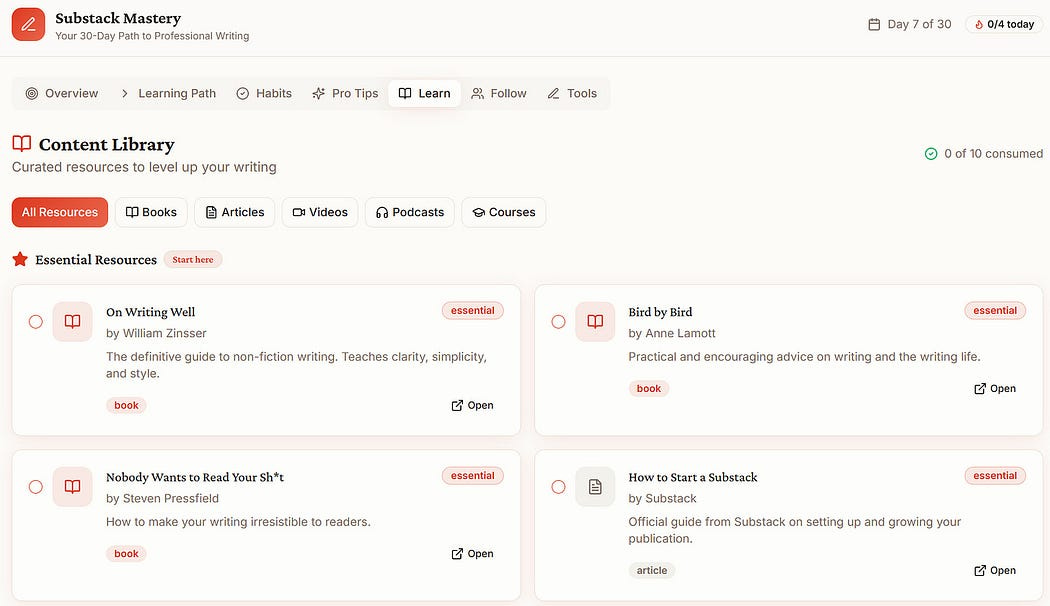
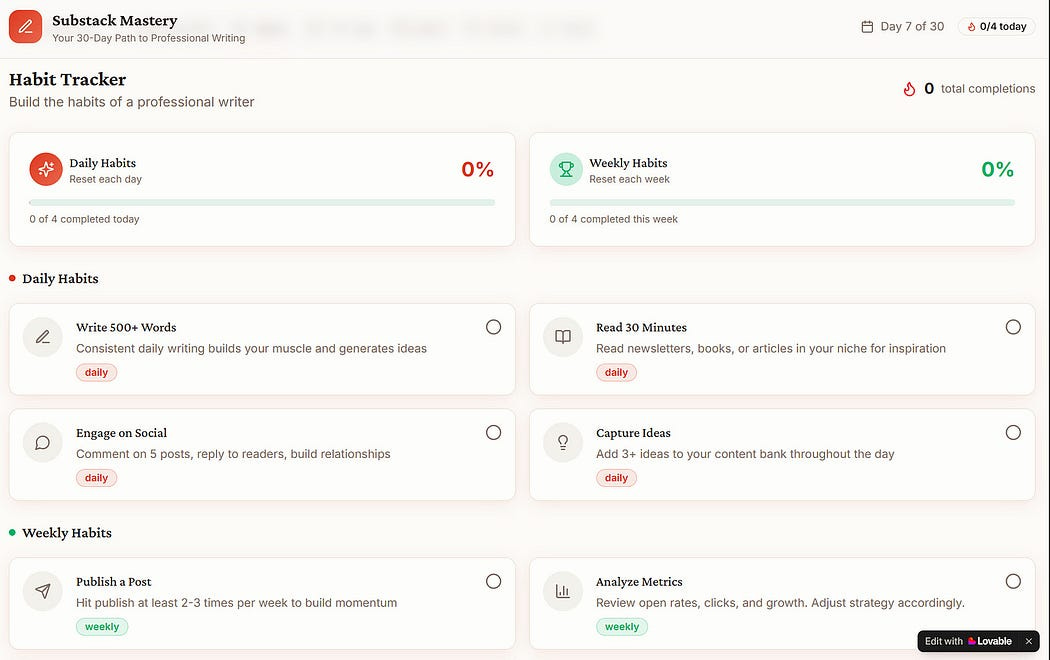
I called my app The Substacker, positioning it as the ultimate content writing companion. The platform helps me stay inspired and maintain a consistent writing rhythm by suggesting creative prompts, organizing resources, and managing task priorities.
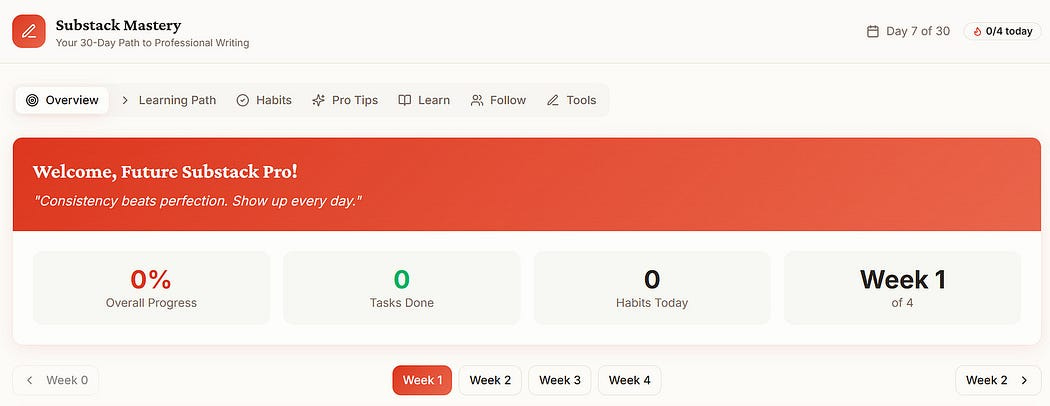
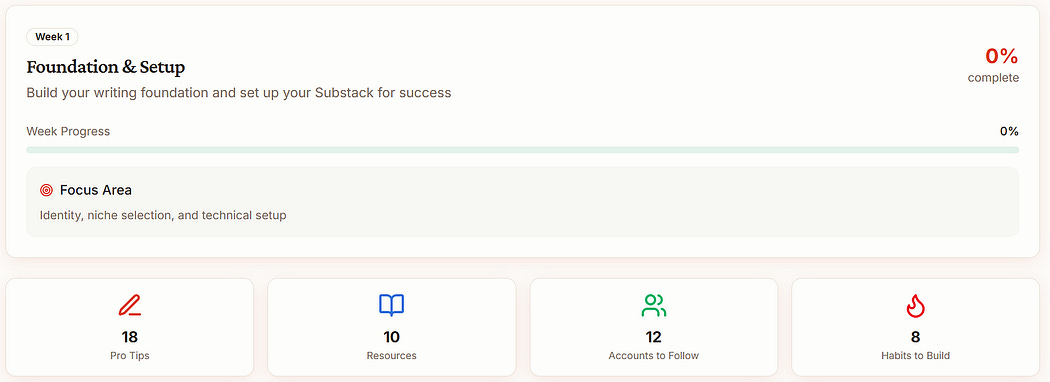
It started as a simple trial to test Lovable’s capabilities, but even a test app needs a concrete vision to build from.
Here’s the paradox: you need a clear vision to start, but that vision will transform the moment you see version one.
Building with AI is iterative, just like traditional development, except you’re iterating in minutes instead of days or weeks. Your first version will be rough and incomplete. It will also spark ideas you never had sitting with a blank page staring back at you.
That’s not a bug. That’s the entire point.
In the beginning, I thought I knew exactly what I wanted. Then I saw the first build and immediately started rethinking everything: “What if we moved the priorities tab to the front? What if I added a dedicated resources section? Could the inspiration prompts be more contextual?”
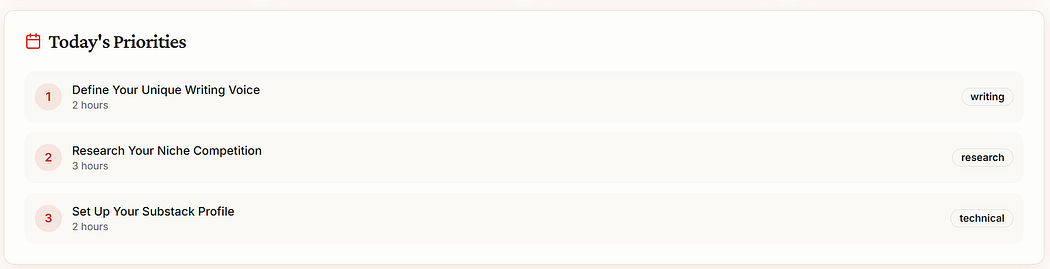
The act of seeing something real, even if imperfect, unlocks creative possibilities your brain simply can’t access in the abstract. There’s something about interacting with a tangible prototype that surfaces insights no amount of planning can replicate.
Ship something rough. Then refine it based on what you actually see, not what you imagined in your head.
This is where AI development truly shines: the first iteration arrives exponentially faster. You don’t have to wait for wireframes from the UX/UI team or a first draft from developers to present to stakeholders (who, in this case, is also you). You can immediately imagine improvements and iterate. The evolution curve accelerates dramatically.
Start absurdly simple, or you’ll drown
This is where most people sabotage themselves, and I nearly fell into this trap myself.
My project was intentionally simple since it was a test, a way to measure the return on investment for 10 minutes of work requiring virtually zero technical skills. But even with that constraint, I felt the pull toward complexity.
When you realize you can build almost anything, the temptation is to build everything.
It’s like being a product manager with a team that never tires, never pushes back, and never fails. The dream position. Feature creep sets in before you’ve even launched. You start imagining comprehensive dashboards, sophisticated user profiles, notification systems, third-party integrations. Suddenly your “15-minute MVP” morphs into a three-month project you’ll never finish, even with Lovable or similar platforms.
Resist this urge with everything you have.
Your first MVP needs to do one thing well and be genuinely usable. Not impressive. Not comprehensive. Usable.
I had to ruthlessly cut features I was genuinely excited about just to ship something into the world. And you know what? That constraint made the product demonstrably better. It forced me to identify the core value proposition and execute it properly before adding secondary features.
Complexity kills momentum. Start simple. Prove the concept works. Then expand thoughtfully based on actual user feedback, not imagined use cases.
You’re not just a builder anymore, you’re an entire team
This was the most disorienting aspect of the experience.
With traditional development, there are clearly defined roles: product managers define requirements and priorities, designers create mockups and user flows, developers write code and build infrastructure. You stay in your lane and collaborate across disciplines.
With AI tools like Lovable, those lanes disappear entirely. You’re suddenly the product owner, project manager, developer, and UX/UI designer rolled into one person.
If you’re the entrepreneurial type who thrives in startup environments, this consolidation can be genuinely thrilling.
Generative AI doesn’t just provide code. It grants you creative control over the entire product experience. You’re making strategic decisions about user flows, visual design, core functionality, and technical architecture simultaneously. That freedom is exhilarating and overwhelming in equal measure.
You need to think like a product strategist (What problem are we solving? Who is this for?), a designer (How should this feel? What’s the optimal user experience?), and a technical architect (How should this work under the hood? What’s scalable?) all at once.
It’s a muscle most people haven’t developed because they’ve never needed to exercise it. Different roles have traditionally handled these concerns separately. But once you develop this integrated thinking? The creative possibilities become intoxicating.
This shift also means you need to become comfortable with ambiguity and rapid context-switching. One moment you’re thinking about color palettes and typography, the next you’re considering data architecture and API integrations. It’s cognitively demanding but incredibly rewarding.
The real shift is from technical skills to vision
Here’s what struck me most profoundly: the bottleneck isn’t technical anymore. It’s clarity of vision.
Anyone can spin up a functional platform now. The difficult part is knowing what to build, why it matters, and who it serves. The difficult part is developing taste: understanding what makes something feel right, work intuitively, and solve a genuine problem elegantly.
Technical execution has become democratized. Strategic thinking and product intuition have become the scarce resources.
We’re entering an era where ideas can be tested and validated faster than ever before. Where the distance between conception and reality is measured in minutes, not months. Where the cost of experimentation has dropped so dramatically that trying out a concept carries almost no risk.
That’s wildly empowering. It’s also somewhat terrifying.
Because now there’s no excuse. The tools exist. The technical barrier has essentially vanished. The only questions left are: what are you going to build? What problem needs solving? And do you have the vision to see it through?
The democratization of software development isn’t just about making coding easier. It’s about fundamentally reimagining who gets to be a creator, what ideas get tested, and how quickly we can move from problem identification to solution deployment.
What I built is far from perfect, and it doesn’t need to be. It’s real, it’s functional, and it exists because the barrier between imagination and implementation has finally crumbled.
What will you build?